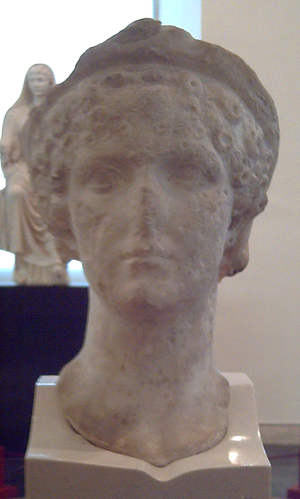
Iulia Agrippina, a.k.a Agrippina the Younger (Agrippina Minor), – so as to distinguish her from her mother Vispasiana Agrippina, a.k.a Agrippina the Elder (Agrippina Maior, 14 BC - 33 AD) –, was the daughter of General Germanicus. Like her influential mother, Agrippina was a brilliant, ambitious and cruel woman who witnessed an era dominated by personal rivalries in affairs of state. Like many other women involved in politics (Fulvia, Messalina), Agrippina is described in ancient sources as a woman of very bad reputation, virile, domineering and fierce, deprived of traditional female virtues. She was the first woman to be daughter, sister, wife and mother of emperors (Tacitus, “Annals”, XII, 42). Agrippina went down in history for having her husband and uncle, Emperor Claudius, poisoned (whom she had married in 49 AD, thanks to a Senate decree which, for the occasion, abolished the law prohibiting marriage between uncles and nieces); she was the only Roman woman whose autobiographical Memoirs (now lost) were published. Her political role undoubtedly justified the choice of such a literary genre, usually practiced by men guided by political ambition. According to the testimony of historian Tacitus (“Annals”, IV, 53) who used these commentarii, Agrippina recounted, in her work, the misfortunes of her family and the story of her life, where the destinies of three Roman emperors meet: Caligula, her brother, Claude, her (third) husband and Nero, her only son, born from her first marriage.