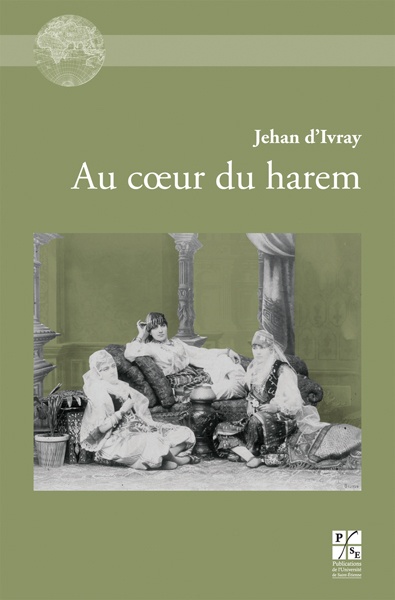
In Cairo from 1878 to 1919, Jehan d’Ivray led a novelesque (“Le Prince Mourad”, 1898; “Souvenirs d’une odalisque” [Memories of an Odalisque], 1913), autobiographical and feminist (“Au Coeur du harem”, [In the Heart of the Harem], 1911), critical (“Bonaparte en Égypte”, 1914) activity, she also contributed to Egyptian French periodicals. Upon her return to France, she published new Egyptian novels (“La Rose du Fayoum” [The Rose of the Faiyum] and “Mémoires de l’eunuque Bechir Aga” [Memoirs of Bechor Aga the Eunoch], 1921) which sometimes featured cultural encounters (“L’Étrange destin de Mademoiselle Aïssé” [The Unusual Fate of Miss Aïssé], 1935), and wrote critical essays (“L’Égypte éternelle”, 1921; “L’Aventure saint-simonienne et les femmes” [The Saint-Simon Adventure and Women], 1929). An intercultural ethnosociologist before her time and a memorialist, she was a privileged witness of the last Ottoman generation she knew from within, and of the French presence in the Middle East. Member of the Société des gens de lettres, of the George Sand Parisian club, she presided the Sol natal association which brought together French women married to foreigners and their children.