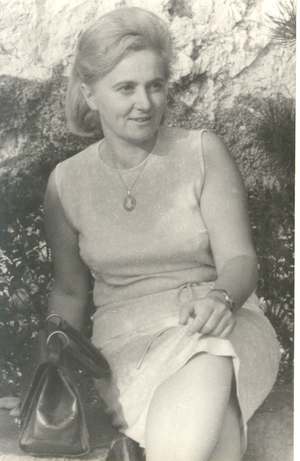
Mira Alečković, one of the most prolific authors of children’s literature in former Yugoslavia, studied literature in Belgrade and at the Sorbonne in 1953-1954, and then became a member of the League of Communist Youth of Yugoslavia. In 1941, she joined the Resistance. After the liberation, she became editor of the first youth magazines: “Omladina” [Youth]; “Pionir” [Pioneer]; “Mladost” [Youth] and “Poletarac” [Bird]. In 1954, she was one of the founders of the Zmaj magazine, named after poet Jovan Jovanović-Zmaj, of which she was editor-in-chief for more than 20 years. She held high-ranking positions with the national daily newspaper Borba [The Fight] from 1954 to 1957 and with the Nolit publishing house from 1952 to 1955. She was also president of the Writers’ Union of Serbia and the Yugoslavia-France Association. Very popular among the general public in the post-war period and a disciple of Serbian poetess Desanka Maksimović (1898-1993), M. Alečković was forgotten after the fall of the communist regime and remains today the symbol of a bygone era. Her poetry was attractive, sentimental and melodious. She has written nearly 20 collections, including: “Zvezdane balade” ([Starry Strolls], 1946); “Ljubavi je malo” ([Little Love], 1959); “Da život bude ljubav” ([May Life Be Love], 1970) or “Pletisanke” (1986). She also wrote novels, including “Zašto grdiš reku?” ([Why do You Blame the River?], 1955), “Zbogom velika ljutnjo” ([Farewell Great Anger], 1958) and “Jutro” ([Morning], 1963). Her prose, although often awarded, has not been very successful. Her poetic work has been included in the compulsory literary education curriculum in all the republics of the former Yugoslavia.