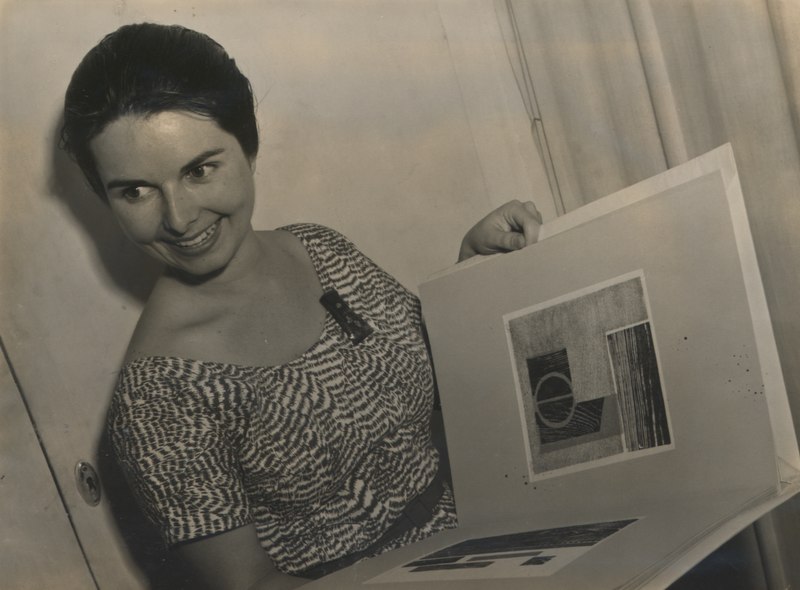
In a context of cultural enthusiasm that favoured industrial progress, in the early 1950s the Brazilian art scene was dominated by concrete art, an abstractionist movement similar to Bauhaus, De Stijl, Suprematism and Soviet Constructivism. The concrete art group Frente in Rio de Janeiro was Lygia Pape’s fist artistic filiation. At the time, she was a young disciple of Fayga Ostrower at the school of the Museum of Modern Art in Rio de Janeiro. Her series Tecelares (weavings), produced between 1955 and 1959, was true to the concrete programme in the spirit of bringing artistic practice closer to industrial work, and in the conception of the art object as an arrangement...
The rest of the extract is not freely consultable.