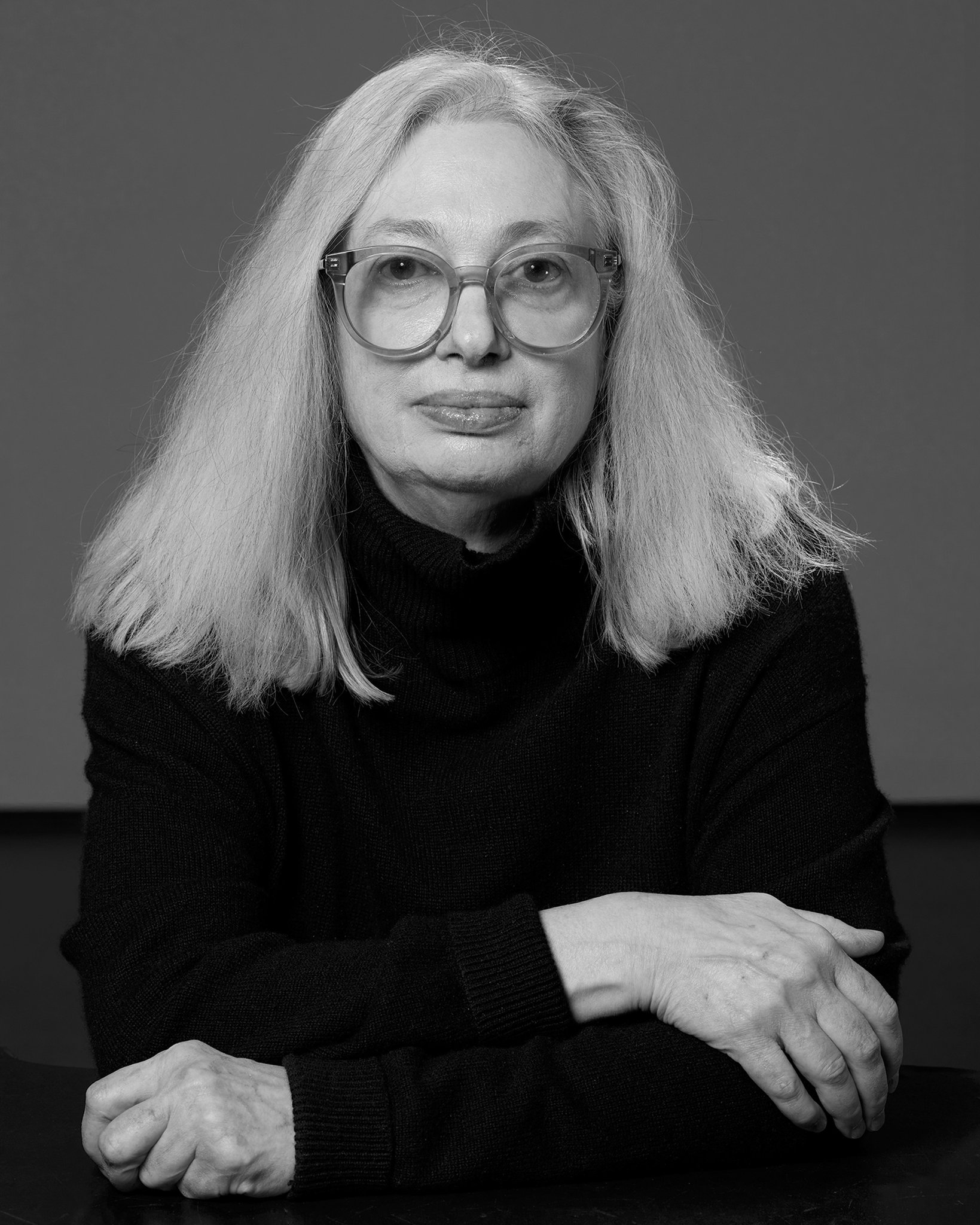
While relatively discrete about her personal life, Sherrie Levine's approach is defined by a radical form of appropriation. This artistic gesture, which consists in identically redoing or slightly transforming works of art, past actions or artefacts, for her as for many artists, amounts to a rejection of the virtuosic aspect of painting that she practiced in art school in the 1970s. Examining the effects of decontextualization and questioning notions of authenticity and originality, since 1978 she has been exploring various modes of appropriation. First by employing cut-outs and then photography, she returned to painting in 1984 and created, namely, the stripe paintings (1985) consisting of large stripes of colour, "generic" paintings that reference a certain type of modernist painting. Her most-commented creation is a series of rephotographs (1980-1981), which consisted in taking photographs of the works of famous photographers such as Edward Weston or Walker Evans. This series, like her work in general, is often associated with feminist criticism. Revisiting the works of male artists is often seen as a commentary on the male domination that exists within the art world. Each photograph gets its title using the same naming convention: Sherrie Levine after x, which indicates that they are works which are, in one way or another, based on an artist, they also come - more significantly - "after" them. Thus, a work without any perceptible difference from its model can be a different work simply because it came after and the story of its creation is not the same. However, recognizing an after x is recognizing that this x changed the scope of art in a fundamental way. As such, Levine's appropriations are always tributes. Her second area of interest is the circulation of images in society and the interferences between different modes of representation. In 1978, she completed a series of fashion magazine cut-outs (Untitled). While each photograph represents a woman (sometimes with a child), she is inserted in a cut-out (an outline) depicting the silhouette of the head of famous men, namely those of presidents George Washington, Abraham Lincoln, and John Fitzgerald Kennedy. The work then brings two modes of figuration into play: the photographic trace and the resemblance (outline). As a minimal artistic gesture, the cut-out transforms the advertising image into criticism; thus these works display the structuring of the female image according to standards of masculine power. When one of these cut-outs is then used on the cover of Real Life magazine (March 1979), the transfigured image enters the reproduction chain: by doing so, the artist, who had initially removed the image from the chain, warns against a non-artistic reappropriation of the artwork. Apart from the photographs of photographs, Levine's references usually experience some kind of perceptible alteration. When she redid Egon Schiele's nude self-portraits, she replaced oil painting with watercolours (Untitled [After Egon Schiele], series, 1984). When she reconstructed the strange pool table from a Man Ray painting, it became a sculpture (La Fortune [After Man Ray], 1990). She mentions that "the act of appropriation is merely the modus operandi" of her work, whose content "consists of the uneasiness provoked by a feeling of dejà-vu, an uneasiness we feel when confronted with something that's not quite original". However, knowledge of the objects that are referenced is required to experience this déjà-vu. Criticized for the elitism that seems to imply, the artist responds that every artist has an ideal public and that she doesn't see why it's less acceptable to target a public familiar with 20th century art than another. She also uses digital photography. For example, After Cézanne (2007) is a series of pixelated photographs of the master's paintings. If we assume that Paul Cézanne's paintings denote a vision of the world towards the end of the 19th century, then these pixelated photographs represent our fragmented vision of the world at the beginning of the 21st century. As a recognized artist, Levine has been featured in solo exhibitions around the world, namely at the Centre for Fine Arts, Brussels (1990), the San Francisco Museum of Modern Art (1991), and the Los Angeles Museum of Contemporary Art (1995).
Klaus SPEIDEL